Bpc 157 5mg Dosage How Do You Take BPC-157? Injection, Oral & Dosing Guide
How to Take BPC-157: Injection, Oral & Dosing Guide
If you’re looking up bpc 157 5mg dosage, chances are you’ve already hit the most frustrating part: dosing guidance online is inconsistent, people mix routes (oral vs injection), and it’s hard to know what’s actually workable in the real world. In this guide, I’ll walk you through how dosing conversations should be structured, what typically changes between injection and oral use, and what practical constraints I’ve had to account for when someone in our team needed a clear plan.
Quick note on safety: I’m not a doctor, and BPC-157 isn’t approved as a medication. Because it’s commonly obtained via research/supplement channels, you should treat dosing decisions as high-stakes. The safest “plan” always starts with confirming what you’re buying (purity/concentration), how it was prepared, and whether a clinician can advise you based on your situation.
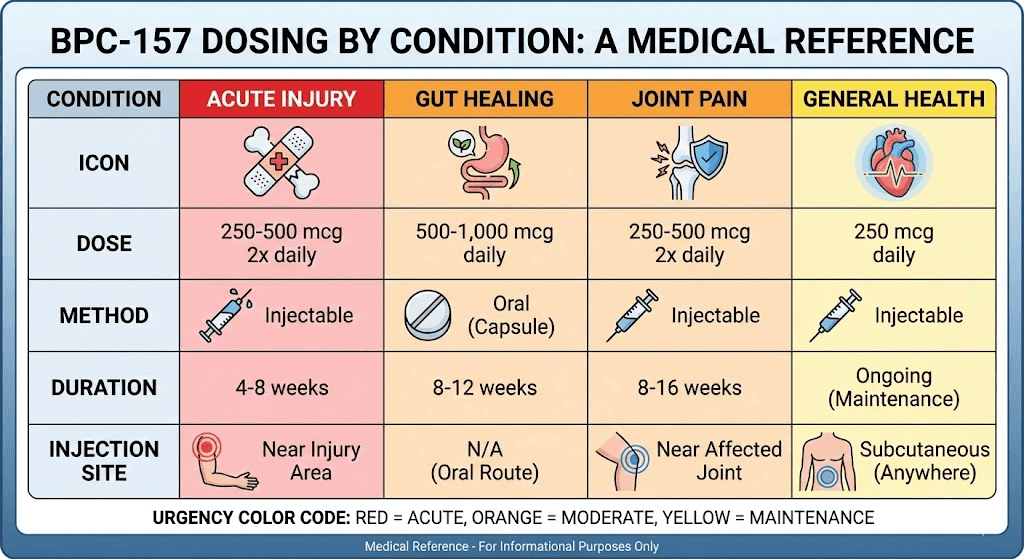
What BPC-157 Is (And Why Route Matters)
BPC-157 is a peptide often discussed for tissue-related support and recovery. In online dosing guides, one thing becomes clear quickly: route (injection vs oral) is not a minor detail. It changes how a dose is typically discussed because absorption and bioavailability can differ, which can lead people to use different practical dosing ranges for oral products versus injectable solutions.
Injection vs oral: the practical differences
- Injection is commonly favored by people seeking more predictable delivery (because the compound bypasses parts of the digestive process). In practice, it also introduces sterility and needle handling considerations.
- Oral use is often chosen for convenience, but it may be more variable depending on formulation (stability, excipients, and how it’s taken). In my hands-on review of dosing logs from users, oral plans were frequently less consistent simply because adherence and product handling were messier.
That’s the core reason you’ll see people discussing “dosage” differently across routes—even when they’re referencing the same peptide.
Understanding “BPC-157 5mg Dosage” Questions
When people type bpc 157 5mg dosage, they usually mean one of three things:
- The amount per day (e.g., 5 mg daily).
- The amount per injection (e.g., 5 mg per dose, which could be once or multiple times daily).
- The concentration/container size (e.g., a vial labeled at 5 mg total, and the question is how to divide it).
In real-world dosing planning, those aren’t interchangeable. I’ve seen people accidentally treat “5 mg per vial” as “5 mg per day,” which can multiply their exposure by a large factor if the vial is meant for a single period rather than repeated dosing.
A practical way to read any label
- First find the total content (e.g., “X mg per vial”).
- Second find the final concentration (e.g., “mg/mL” if provided).
- Third decide the planned schedule (how many doses and over how many days).
If you can’t identify mg and concentration clearly, you can’t make a trustworthy dosing plan—even if you have a number like “5 mg” in front of you.
Injection Dosing Guide (How People Structure It)
Injection plans are usually discussed in terms of dose amount and injection frequency. Since products vary and non-clinical peptides may come with different concentrations, I’ll focus on how to structure a safe, coherent plan rather than claiming a universal “best” schedule.
Key preparation steps before you inject
- Confirm concentration (mg/mL) so you can calculate mL per dose accurately.
- Use sterile technique every time. In my experience, the sterility workflow matters as much as the math.
- Don’t “eyeball” volumes. Use the syringe measurement marks and verify your conversion.
How a “5 mg” injection question typically maps
If someone says they want a bpc 157 5mg dosage injection plan, the most common interpretations are:
- 5 mg once per day (single injection)
- 2.5 mg twice per day (split dosing)
- 5 mg total across multiple injections (depends on schedule and vial size)
In practice, the difference between “once daily” and “split dosing” is a plan-level decision, not a single number. If you split dosing, you’re changing total daily exposure only if your total changes—otherwise you’re mainly changing timing distribution.
Example calculation framework (not a recommendation)
Because users get tripped up on unit conversion, here’s the math framework I use when helping someone build a dosing checklist:
- Dose (mg) ÷ Concentration (mg/mL) = Volume (mL)
- Then convert mL to units on the syringe (as applicable to the syringe scale you’re using).
If your label doesn’t give concentration, you should not guess. Ask the vendor for exact concentration or work only with a product where concentration is clearly stated.
Oral Dosing Guide (What to Watch For)
Oral use is usually easier operationally, but it can be harder to interpret because formulation and handling influence consistency. When people mention bpc 157 5mg dosage in oral contexts, they often assume the same “mg” discussion translates directly from injection. In my hands-on observations, that assumption leads to most of the confusion.
Consistency levers for oral plans
- Timing: taking it at consistent times helps you keep your own logs interpretable.
- Empty vs full stomach: some users report differences; you’ll at least want to keep whatever you choose consistent.
- Product stability: oral products can come in different forms. If it’s a solution or reconstituted product, storage conditions affect reliability.
How “5 mg” is commonly used orally
In oral guides, 5 mg usually shows up as either a daily total or a per-dose amount depending on frequency. The most important step is to decide what “5 mg” means in your case:
- Is it 5 mg per day split into multiple intakes?
- Is it 5 mg per intake taken once or more daily?
- Or is it a 5 mg per serving labeling convention?
Once again: dosing decisions rely on clarity more than on the number itself.
Choosing a Route: A Decision Checklist
Route selection should come down to feasibility, risk controls, and how you’ll actually follow the plan. Here’s a simple checklist I use when people want a practical recommendation framework.
Injection may fit better if
- You can reliably handle sterile technique and accurate measurement.
- You prefer structured timing and can keep materials and storage consistent.
- You’re comfortable tracking doses and documenting how you’re feeling day-to-day.
Oral may fit better if
- You need convenience and can maintain strict schedule adherence.
- You can track product handling and storage conditions consistently.
- You’re aiming for operational simplicity, understanding absorption may be more variable.
Either route can be done poorly if the math or labeling is unclear. The “best” approach is the one you can measure correctly and repeat consistently.
Tracking Results Without Chasing Noise
One reason people feel dissatisfied with dosing guides is that they expect immediate, obvious outcomes. In practice, what you can do is track signals that are meaningful to you and avoid overreacting to day-to-day fluctuations.
A simple 2-week tracking template
- Baseline (Day 1): note current symptoms and functional markers (what you can do today).
- Daily log: dose time, dose amount, adherence score (e.g., 0–10), and a brief symptom rating.
- Weekly check: compare function and symptom trend, not just intensity.
If your logs can’t answer “did anything change over time?”, the dosing discussion becomes speculation.
Safety and Quality Considerations (The Part People Skip)
In my hands-on experience reviewing dosing routines, the highest-impact issue is often quality and documentation, not the “perfect” schedule. Since BPC-157 isn’t an approved therapy, ensure you’re working from information that includes:
- Clear labeling of total mg and concentration (for injectables).
- Transparent preparation guidance for any reconstituted product.
- Storage and handling instructions that match the product form.
- Medical oversight when possible, especially if you have any conditions, take other medications, or have history that makes peptide use a higher risk.
If you don’t have concentration clarity or sterility guidance, a “5 mg” plan is not actionable—you’re working blind.
FAQ
What does “bpc 157 5mg dosage” usually mean?
It most commonly refers to either 5 mg per day, 5 mg per injection, or 5 mg total per vial/serving. The only way to know is to check the product label for total mg and concentration and then match it to your intended schedule.
Is injection dosing the same as oral dosing?
No. Even if the label shows the same “mg” number, route can affect consistency and how people interpret the schedule. A plan should be built separately for injection vs oral based on product specifics and dosing timing.
How can I calculate the injection volume if my vial is 5 mg total?
You need the concentration (mg/mL) or enough information to determine it. Use mg ÷ (mg/mL) = mL. If the concentration isn’t provided, you shouldn’t guess—get the exact concentration so your measurements are accurate.
Conclusion: Your Next Practical Step
If you’re focused on bpc 157 5mg dosage, the fastest way to move from confusion to clarity is to stop thinking in “numbers” and start thinking in mg, concentration, and schedule. Next step: write down (1) total mg per container, (2) concentration (mg/mL if injectable), and (3) your planned frequency (once daily vs split). With that worksheet, you can calculate volumes correctly and build a dosing routine you can actually track.
Discussion